






My experience + best gravel routes
There's something that happens on a long gravel climb when everything hurts, and the road ahead refuses to flatten; you find out pretty quickly what you're actually made of. For me, that reckoning happened somewhere in the Adirondacks, deep into the Black Fly Challenge, legs burning, gravel crunching, and the singular focus that only comes when there's nothing left to do but keep moving.
The Black Fly Challenge is a 40-mile gravel race that winds through some of the North Country's most stunning backcountry landscapes, and this year I toed the line for the first time. What followed was equal parts sufferfest and revelation, and a reminder of why this community, these roads, and this region have a way of getting under your skin. This blog is part race recap, part tribute to the riders and routes that shaped my training, and part gravel guide for anyone ready to find their own reckoning out here.
What is the Black Fly Challenge?
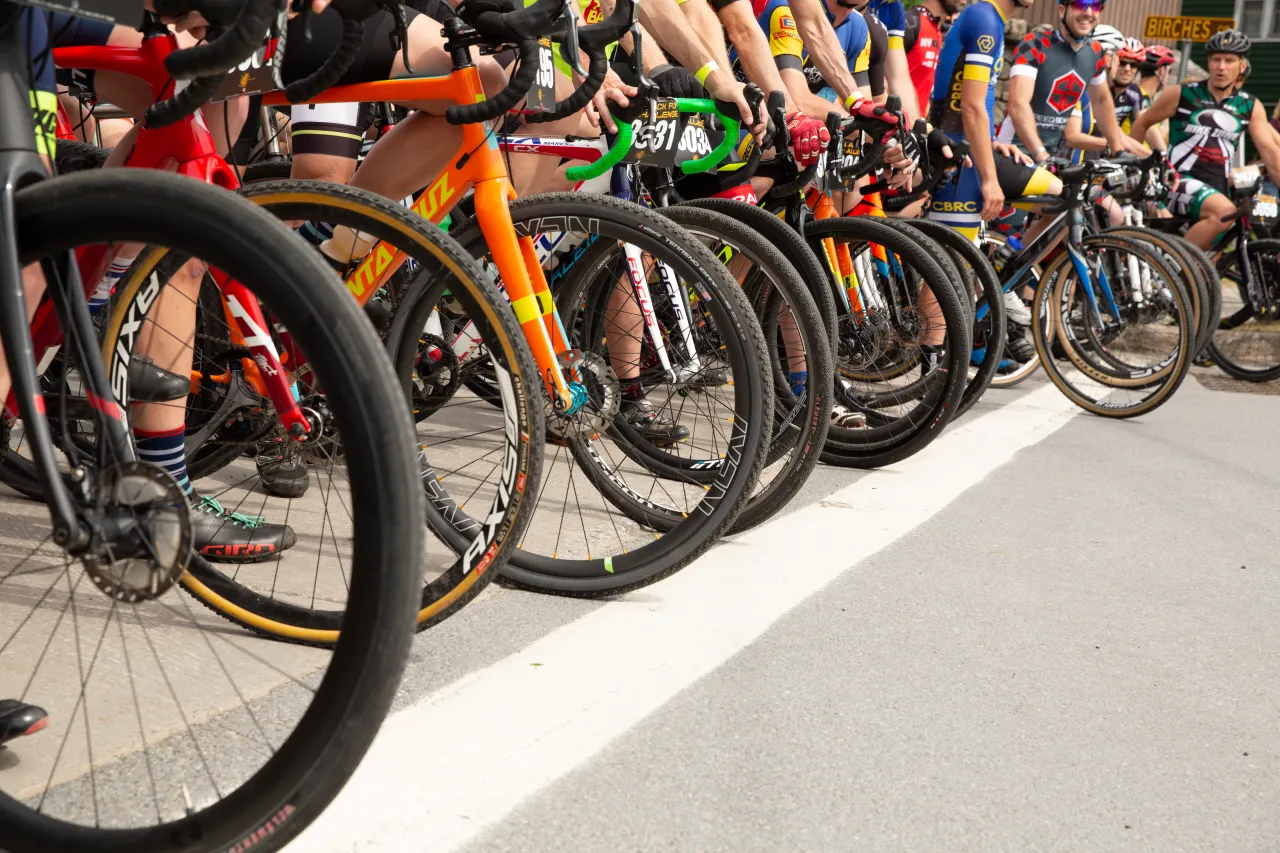
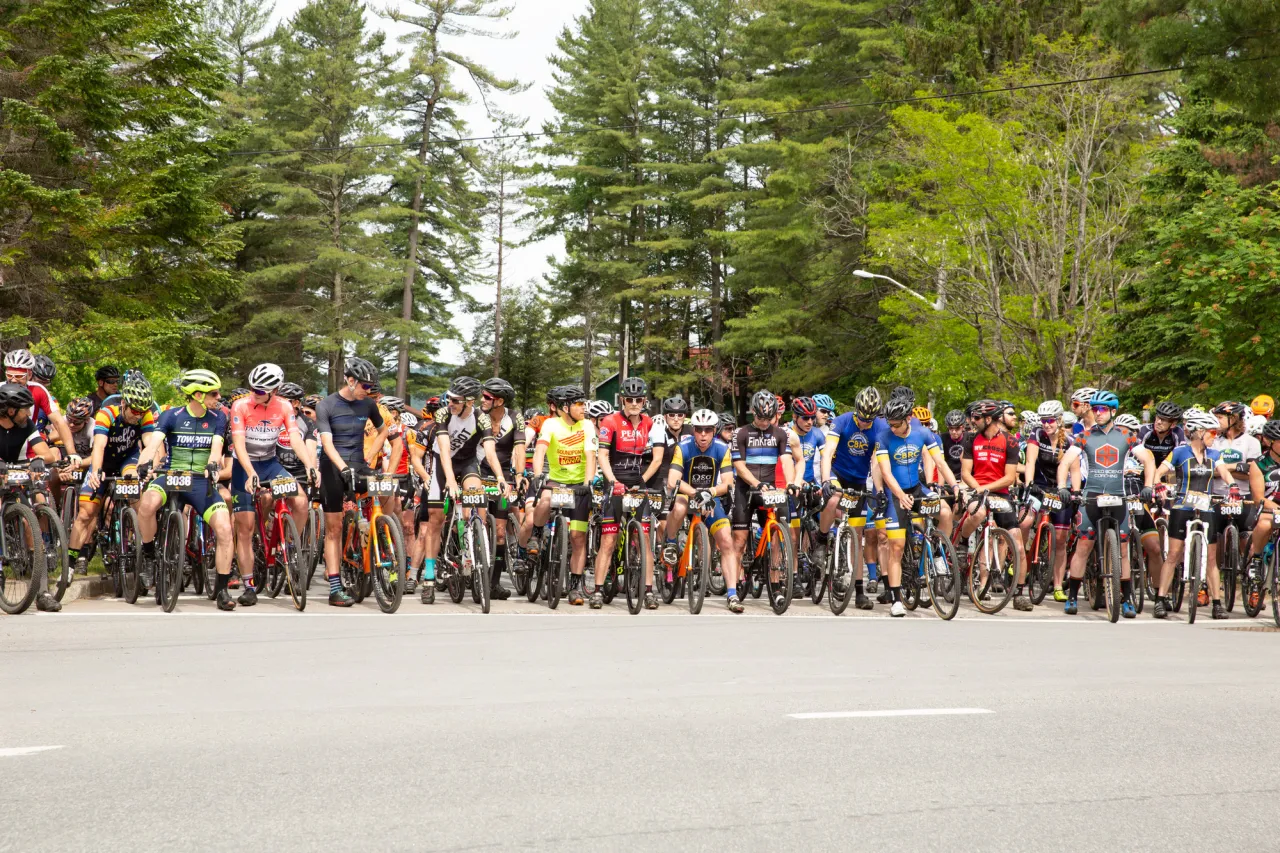
If you follow gravel cycling, you may have heard whispers about the BFC, but it doesn't always get the mainstream coverage it deserves. The Black Fly Challenge bills itself as America's Original Gravel Grinder, and that history goes back further than most people realize. The first Black Fly Challenge took place in 1996 with just 60 competitors. Nearly three decades later, it's grown into one of the most anticipated events in the Northeast, drawing close to 1,000 participants, with hundreds more gathering to cheer along the course.
Held annually on the second Saturday in June, the race covers 40 miles of gravel terrain through the Adirondack backcountry, crossing the rugged Moose River Plains along waterways, logging roads, and forest trails dense enough to make you forget there's a world outside them. The race changes direction every year, with the start and finish alternating between Indian Lake and Inlet. Either direction, the course dishes out over 2,500 feet of elevation gain, with long grinding climbs and descents that will either thrill you or humble you, depending on your relationship with loose gravel at speed.
The course: why Hamilton County deserves your attention
The 29th running of the Black Fly Challenge took place on June 13, 2026, starting at Arrowhead Park in Inlet and finishing at the Indian Lake School in Indian Lake. This year's direction meant riders climbed early and climbed often, working through the rolling terrain of the Moose River Plains before the course opened up and let you breathe, briefly, on the way toward Indian Lake.
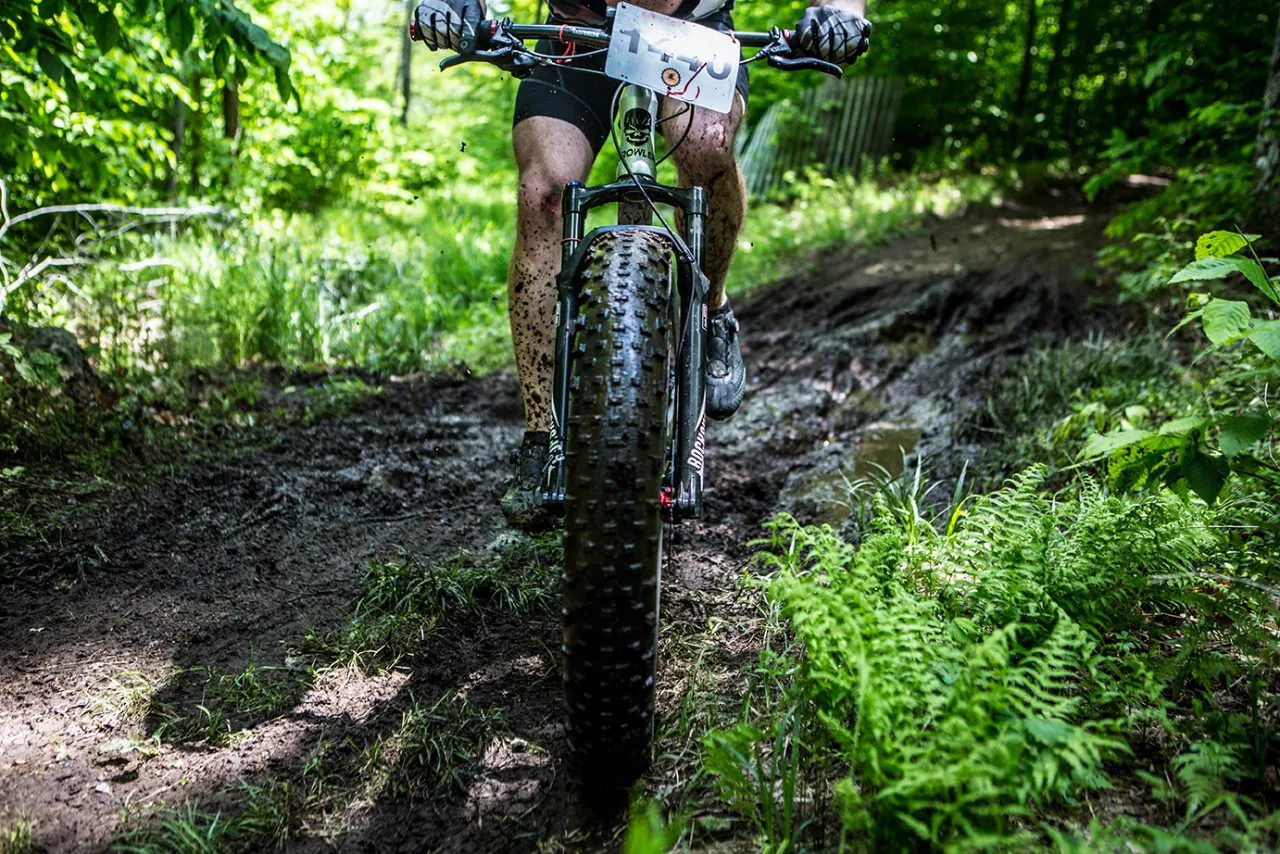
From Arrowhead Park, the course heads east on Route 28 before turning south on Limekiln Road and into the Moose River Recreation Area. The climbing starts immediately, with 500 feet of gain in the first five miles, followed by relentless rolling terrain with 100- to 200-foot elevation changes through the heart of the backcountry. A stretch along the relatively flat Moose River Plains offers a brief reprieve before the course delivers a steady 800-foot climb toward Wakely Mountain. From there, it drops through 100- to 300-foot elevation changes down to Cedar River Road, then follows Routes 28/30 into downtown Indian Lake, finishing at the Indian Lake School.
A few logistics worth knowing if you're considering registering: this is a destination race, so plan to have someone drive your vehicle to the finish line or book the limited shuttle service in advance. There are a few water stations on course, but you're on your own for energy supplies, tools, and tubes since mechanical support isn't allowed. The field itself is refreshingly diverse, drawing pro racers and recreational riders on gravel bikes, mountain bikes, tandems, and even unicycles.
What got me to the start line
The Black Fly Challenge was my first bike race, full stop. I only picked up gravel riding after moving to the Adirondacks, and what got me here wasn't a lifetime of cycling experience but something harder to quantify: the people. Living here as a resident changes the way you learn a sport. The community around gravel riding in the Adirondacks is generous in a way that's difficult to describe until you've experienced it, and the support I received from riders around me made the whole journey worthwhile long before race day arrived. That's ultimately what the Black Fly Challenge offers to those who travel here for it. Yes, you're riding iconic Adirondack backcountry gravel, but you're also getting a window into something rarer: a community that genuinely loves where it lives and wants you to love it too.
My training took me all over the region. Long, steady miles on the Adirondack Rail Trail. Rides around Upper Jay in the Whiteface Region. Countless backcountry roads near Saranac Lake and Onchiota. Two weeks before the race, a group of us camped at Eighth Lake Campground and rode the full course the following morning, Inlet to Indian Lake, just to feel it out. It was beautiful and hard and exactly what I needed. But nothing prepares you for the adrenaline of race day.
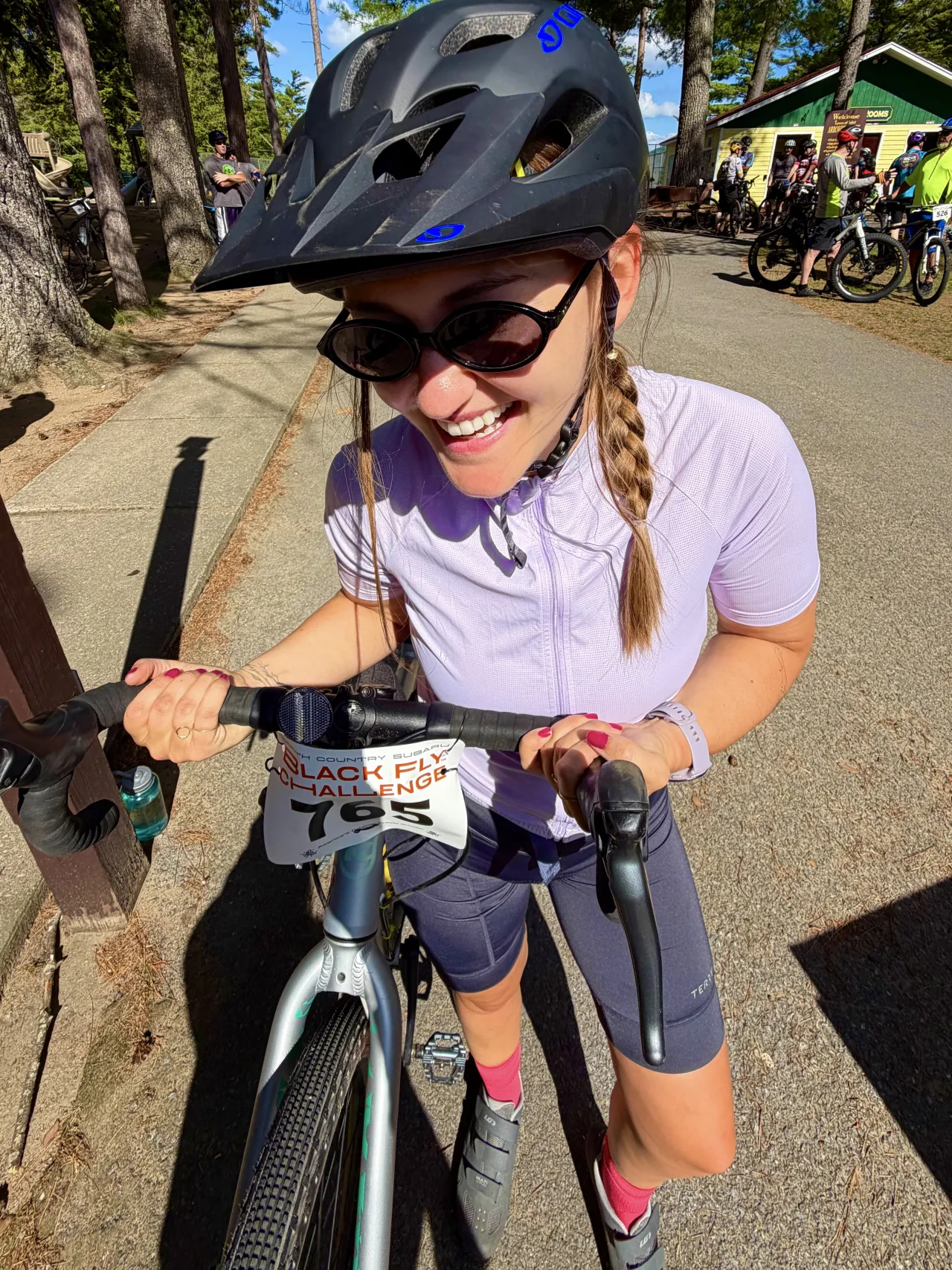
I went in as a Cat 2 rider with modest expectations: try hard, stay present, be in it for the experience. What I didn't expect was to finish in 2:57, just under three hours, or to place third in my age group. I genuinely didn't think placement was possible for me. But the energy on that course is unlike anything I've felt on a bike. Spectators lined sections of the route, and as a woman relatively new to the sport in a field that skews heavily male, the moments that stood out most weren't the climbs or the descents. They were the women who fell into pace beside me and offered a word of encouragement, and the spectators who cheered with the specific, electric energy of people rooting for you to surprise yourself.
Best gravel routes to ride while you're here
Training for the Black Fly Challenge meant spending a lot of time exploring the roads that make this region worth racing through in the first place. Whether you're prepping for the BFC or just looking to get out on the gravel, the Adirondacks have no shortage of routes worth riding. BikeADK's Find a Ride page is a great place to start, letting you filter routes by region across the park so you can find something that matches your fitness level and how far you're willing to travel. Below are some of my personal favorites that shaped my training and repeatedly reminded me why I moved here.
Moose River Plains Road: The BFC Preview
Inlet to Indian Lake (or reverse)
40 miles | 2,500 feet elevation gain
You don't have to wait for race day to ride the backbone of the Black Fly Challenge. The Moose River Plains Complex spans roughly 80,000 acres of public land crossed by more than 40 miles of old dirt logging roads, and riding it recreationally is one of the best ways to understand what you're signing up for when you register for the BFC. The point-to-point profile shifts slightly depending on which direction you ride, but either way, you're getting the full picture.
Route 30 Along Indian Lake + Route 28 to Blue Mountain Lake
Indian Lake to Blue Mountain Lake
46 miles as a full out-and-back | 2,200 to 2,500 feet elevation gain
Sometimes the pavement is the ride. The scenery along Route 30, paralleling Indian Lake and continuing up Route 28 to Blue Mountain Lake, is beyond comparison. The south leg runs roughly 24 miles round-trip along Indian Lake with about 1,100 feet of gain, while the north leg adds another 22 miles and 1,200 feet up to Blue Mountain Lake. Together they make for a sweeping 46-mile out-and-back that mixes lake views with quiet Adirondack highways that see a fraction of the traffic you'd find up on Route 73 in the High Peaks. Ride it as a full loop, or split it into two separate outings.
Sagamore Road / Great Camp Loop
Inlet
8 miles as an out-and-back | Up to 25.4 miles as an extended loop | 757 to 1,257 feet elevation gain depending on configuration
From Inlet, a short ride along Hamilton County Route 2 across the Browns Tract Inlet Bridge to Sagamore Road offers views across Inlet and Raquette Lake that will have you wanting to stop for the whole afternoon. Once you cross Route 28 and leave the pavement behind, the dirt road rolls over small hills on a surface that's hard and fast, with only a few loose stones on the steeper sections that are easily avoidable. The core out-and-back clocks in at 8 miles and 757 feet of gain, making it accessible without feeling trivial. But if you want more, combining Sagamore Road with Uncas Road by starting further west toward Eagle Bay opens up two extended loop configurations: an intermediate 17.4-mile option with 500 feet of gain, or a more demanding 25.4-mile loop with 1,257 feet. It's one of those routes that scales cleanly to however much you have in your legs on a given day.
Fern Park Trails
Inlet
14+ miles of interconnecting trails | 482 feet maximum elevation change
If you want to get off the road entirely, Fern Park in Inlet is a popular recreation area offering a different kind of off-road experience. It's not a gnarly trail system, but that's exactly the point. The network spans more than 14 miles of interconnecting loop trails with a maximum elevation change of 482 feet across the entire system, and because it's designed as a modular network rather than a single route, you can piece together different colored loops based on your mood, fitness level, and how much time you have.
Speculator Biking Trail System + Mt Sabattis Recreation Area + Oak Mountain Bike Park
Speculator / Long Lake / Speculator
A mountain and gravel hybrid system on the southern edge of Hamilton County, the Speculator trails offer two distinct options depending on how much time and elevation you have in your legs. The Outer Loop runs 14 miles around a working tree farm and Pine Mountain on a mix of dirt, gravel, and brief paved connectors, while the shorter 7-mile Kunjamuck Loop takes you past the historical Kunjamuck Cave, one of those only-in-the-Adirondacks detours that makes a ride feel like an adventure. Riders looking for more single-track style mountain biking in the area should also check out Oak Mountain Bike Park in Speculator and Mt Sabattis Recreation Area in Long Lake, another Hamilton County gem worth adding to the list.
Adirondack Rail Trail
Lake Placid to Tupper Lake
34 miles | Relatively flat (2% grade)
A former railroad corridor converted into a multi-use trail, the Adirondack Rail Trail connects Lake Placid, Saranac Lake, and Tupper Lake across 34 miles of crushed stone and packed gravel. The grades are gentle throughout, making it an ideal route for building base fitness or logging long, steady miles without the punishment of backcountry climbs. It was a staple of my training and one I'd recommend to any rider new to gravel or looking for a scenic, low-stress way to explore the region.
Classic ADK Gravel Loop
Onchiota
11.5 miles | 400 feet elevation gain
Starting from Buck Pond State Campground, this loop follows Buck Pond Road to Kushaqua-Mud Pond Road, loops up near Loon Lake to meet Thatcherville Road, and finishes on a beautifully flat, old railroad bed tracing the water.
Cobble Wobble
Upper Jay
18.9 miles | 2,000 feet elevation gain
A loop starting in Upper Jay, Cobble Wobble is the kind of ride that builds character. At 18.9 miles with around 2,000 feet of climbing packed in, it's a genuine workout with steep climbs and punchy descents that make it excellent prep for anything the BFC throws at you. If you're not ready for the full loop, there's a bailout option after the first big climb and descent: hop on Route 9N back to Upper Jay, and you've still earned it. The full route is available on BikeADK and on Ride with GPS.
Three Lakes Route
Saranac Lake
31.4 miles | 1,961 feet elevation gain
Starting near downtown Saranac Lake and heading out on Forest Home Road, this route links Little Colby Pond, Lake Clear, and Upper St. Regis Lake across just over 31 miles of varied terrain. It's a beautiful ride that balances climbing with payoff, and the lake views along the way make it easy to forget you're also putting in serious training miles.
Bloomingdale Bog Trail
Saranac Lake to Bloomingdale
3.7 miles one way | Less than 1% grade
A former rail corridor running between Saranac Lake and Bloomingdale. At under 1% grade, it's essentially flat, making it a perfect recovery ride or an easy introduction to off-road cycling. Ride the 3.7-mile segment on its own or continue past County Route 55 onto the connected northern rail trail sections for a 19.5-mile out-and-back. The bog scenery along the way is genuinely stunning, especially in the early morning, and it's one of those rides that reminds you the Adirondacks don't always have to be a sufferfest to be worth your time.
Things to do in Hamilton County around race weekend
The Black Fly Challenge doesn't have to be a one-day trip. Hamilton County, which encompasses a variety of small towns, is one of the most underrated corners of the Adirondacks, and race weekend is a great excuse to make a long trip out of it. Both Indian Lake and Inlet have solid dining, lodging, and camping options that fill up fast alongside race registrations, so book early. When you're not on the bike, the region rewards exploration in every direction: paddling, fishing, hiking, and poking around the kind of iconic Adirondack general stores that sell live bait and locally made maple syrup in the same aisle.
This year's race may be behind us, but it's never too late to start looking ahead. The 30th Black Fly Challenge takes place on the second Saturday in June 2027, and if this year taught me anything, it's that showing up is more than half the battle. The roads, the community, and the race will take care of the rest.